Heart-healthy eating has a reputation for being bland, expensive and complicated. It is none of those things. What matters most is a handful of repeatable choices you make most days of the week.
Heart-healthy eating has a reputation for being bland, expensive and complicated. It is none of those things. What matters most is a handful of repeatable choices you make most days of the week.
Rather than overhauling your diet, start with swaps. A swap keeps the structure of a meal you already enjoy while quietly improving its effect on cholesterol, blood pressure and inflammation.
Start with fats, not with restrictions
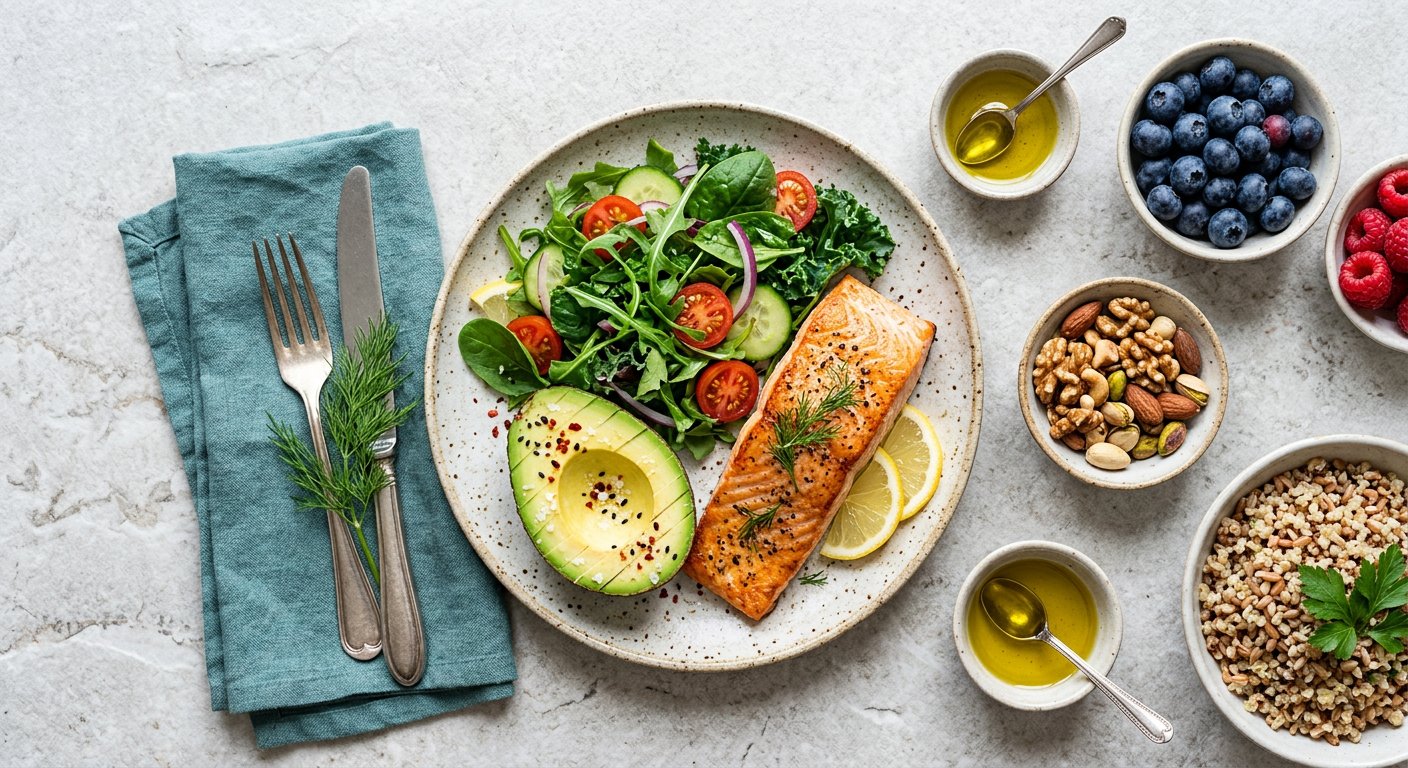
The single most useful shift most people can make is changing the type of fat they cook with and spread. Replacing butter, ghee and cream with olive oil, rapeseed oil or a plant-based spread lowers LDL cholesterol in a way few other single changes match.
It does not require new recipes. Use olive oil where you already use oil, choose a soft spread instead of butter on toast, and keep cream for occasions rather than Tuesdays.
Six swaps worth making this week
- White rice or bread → the wholegrain version. Fibre feeds the gut bacteria that help regulate cholesterol, and it keeps you full for longer.
- Salted snacks → unsalted nuts and seeds. A small handful is one of the most consistently heart-protective snacks there is.
- Processed meat → oily fish, lentils or beans. Two portions of oily fish a week, or a plant-protein alternative, meaningfully shifts your risk profile.
- Sugary drinks → water, sparkling water or unsweetened tea. Liquid sugar is absorbed fast and adds almost nothing to satiety.
- Creamy sauces → tomato, herb and yoghurt-based ones. You keep the flavour and lose the saturated fat.
- Dessert every night → fruit and yoghurt most nights. Not a ban — simply a change in what "most nights" means.
Perfection is not the goal. Consistency is. A diet you can still follow next year beats an ideal one you abandon next week.
Do not forget salt, sleep and movement
Nutrition does not work in isolation. Most dietary sodium comes from bread, sauces and packaged food rather than the salt cellar, so reading labels matters more than removing the shaker. Poor sleep raises blood pressure and appetite the following day. Regular movement improves how your body handles the food you eat.
These three reinforce each other: eat slightly better, sleep slightly longer, walk slightly more, and the combined effect is considerably larger than any one of them alone.
When to get personalised advice
If you have a family history of heart disease, raised cholesterol, diabetes or high blood pressure, generic advice has limits. Book a nutrition consultation with our team and we will build a plan around your results, your routine and the food your household actually eats.